With the right preparation and plenty of water, you will harvest juicy Sellerina stalks directly from your own garden.
Thomas6 min readUpdated on October 19, 2026
Written by Thomas, GrowSimply developer who loves good food.
In short
Cultivation takes place by pre-growing in the house or greenhouse with transplanting from May onwards. The harvest begins three months after planting and lasts from August to October. You can achieve a yield of about 500 g per plant.
At a glance
curated data from the GrowSimply database
Germination temperature
10–20 °C
Growing time
approx. 5 months
Yield per plant
approx. 500 g
Planting distance
30 × 40 cm
Growing method
Pre-growing
Harvest window
August – October
You don't need to remember any of this, because GrowSimply creates your growing plan from these properties.
These are average values for Central Europe, from the GrowSimply database. Values differ depending on variety and location. You can change each property by hand — or the Assistant adapts the plant to your climate.
When loading, YouTube (Google) transfers data such as your IP address and may store information on your device.
Privacy policy
Links open in a new tab at the respective provider. Their privacy policy applies there.
Location & Soil
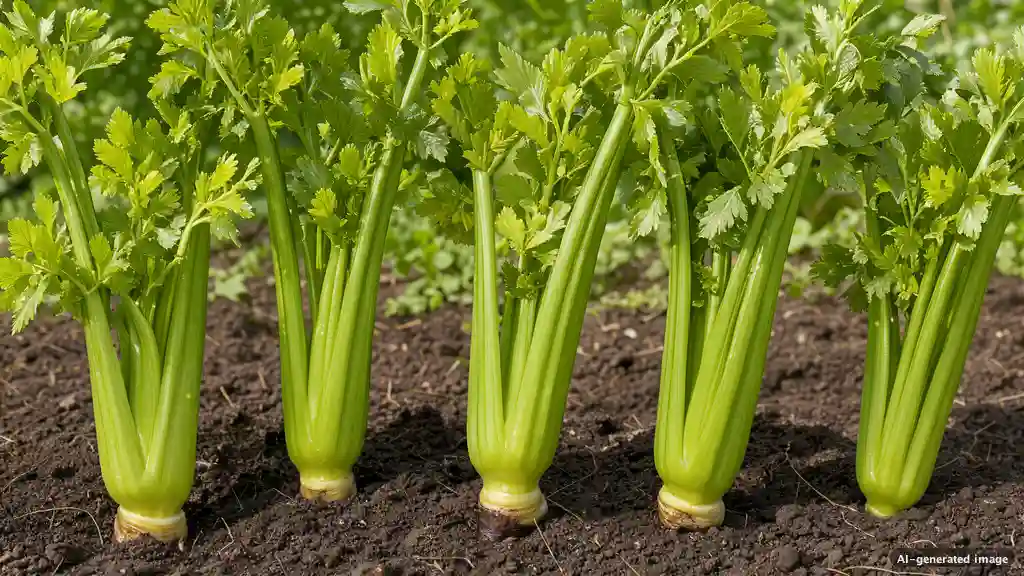
celery needs a sunny spot and deep, humus-rich soil for vigorous growing. If you give it full sun, it provides you with the maximum number of sunshine hours per day as an energy source. The plant forms a bushy shape with a final height of 50 cm. If the soil is only loose on the surface, its medium-depth root will quickly reach its limits. You harvest juicy stalks if you provide it with a location where the soil is rich in humus and reaches deep down. Soil that is too shallow or nutrient-poor will make it look more like an exhausted marathon runner than a proud plant.
Sowing & planting
Pre-growing
Pre-growing option
You pre-grow your celery for two months and only transplant it outdoors starting in May. Pre-growing begins as early as February in your house or greenhouse. If you maintain a soil temperature of 10 to 20 °C, the seeds will reliably germinate within 14 to 21 days. Since celery is a light germinator, the seeds need light to germinate. Therefore, you only press them down lightly and sieve only a very thin layer of soil over them so that they do not dry out. If you cover the seeds with a thick layer of soil, they will refuse to serve you. Never water from above, as this would wash away the fine layer. From mid-May, after the Ice Saints, your plants go into the garden. Each plant requires a spacing of 30 cm in the row and 40 cm between rows. If you plant the plants slightly deeper or mound them up later, the stalks will become long and pale. During growth, celery behaves almost as modestly as a child who only needs a very thin blanket to avoid freezing.
The right time windows for your garden are already in your growing plan — you don't even have to do the math. They are derived from your location and climate.
Watering & Fertilizing
celery needs an enormous amount of water and many nutrients to form its strong stalks. If you treat it like a thirsty guest who only gets an occasional sip, the plant will quickly become shriveled and lose its crunch. You must water regularly, because its high water requirement is relentless. Since it is also a heavy feeder, it draws massive amounts of nutrients from your soil. If you do not provide it with this energy, the growing will suffer. Add plenty of ripe compost to the soil so that it has a solid foundation. You should supplement with nitrogen every few weeks, for example with nettle manure. If you follow these regular fertilizations, it will really boost the growth. Without this steady supply, the celery acts more like a tired slouch than a proud vegetable plant.
Harvest
You can recognize maturity by the shiny, juicy stalks that snap off cleanly with light pressure. If you time it right, you will harvest a crisp result instead of woody fibers. You can either pull out the outer stalks individually or cut down the entire plant just above the ground. If you take the individual stalks, the rest will continue to live in your bed. The harvest begins in August and lasts until October. If you want your Sellerina to be particularly light, blanch the stalks three weeks before the actual harvest. You have a two-month window for your continuous harvest after the plant has been in the soil for about three months. If frost is imminent, you should have everything harvested. A single plant yields about 500 g. Sellerina is a patient companion, as its total crop duration from sowing to the end of the harvest is five months.
Frost & Protection
celery loses all its vitality in frost because it is not hardy and the cold catches the plant all at once. When the first frost comes and your celery is still unprotected in the open field, you will lose it immediately. In an open field, the plant can tolerate a safe cultivation limit of -5 °C. If you provide protection under film or in a tunnel, the limit drops to -6 °C. You can still harvest healthy vegetables at temperatures up to -8 °C if you house it in a greenhouse or under fleece. celery benefits massively from weather protection, as it otherwise simply gives up in frost.
crop rotation
You must give celery a three-year planting break before it can be planted in the same spot again. If you bring the plant back too early, you risk the success of your harvest. Celery belongs to the umbellifers plant family, and this plant family needs a 3-year planting break in the same location. You lose valuable nutrients in the soil if you do not follow a rotation. Since celery is considered a heavy feeder, it draws extremely many nutrients from the earth. If you immediately load the soil with the same family again after harvesting, the food for the next generation is already exhausted. You save yourself tedious fertilizing events and have healthy plants if you plan your bed wisely. For continuous cultivation, you need 4 separate sub-areas in your garden. If you plant these sub-areas one after another, the soil always remains in balance. Your garden will become a well-oiled machine instead of an unpredictable construction site for nutrient deficiency.
Seeds & Propagation
You win the celery seed by overwintering a healthy plant and bringing it to bloom in its second year. When you harvest the ripe seeds, you can work extremely economically, because from one gram you get approximately a thousand plants. You save yourself the repurchase if you use the germination capacity of up to 4 years with good storage. Since the germination rate is about 65%, you should prepare a thermal bath for the seed before sowing. If you bathe the seeds in 53 degree hot water for ten minutes, they will reliably become clean. For small grains like these, it's like a wellness vacation without a sun lounger.
Flavor & Use
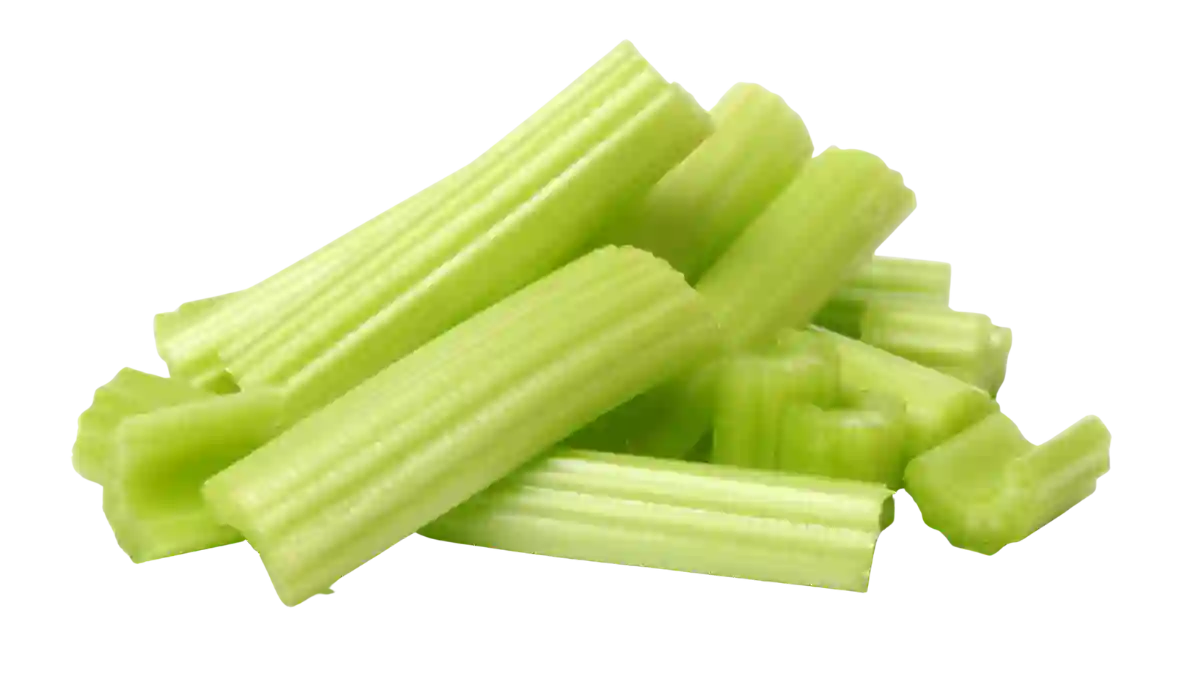
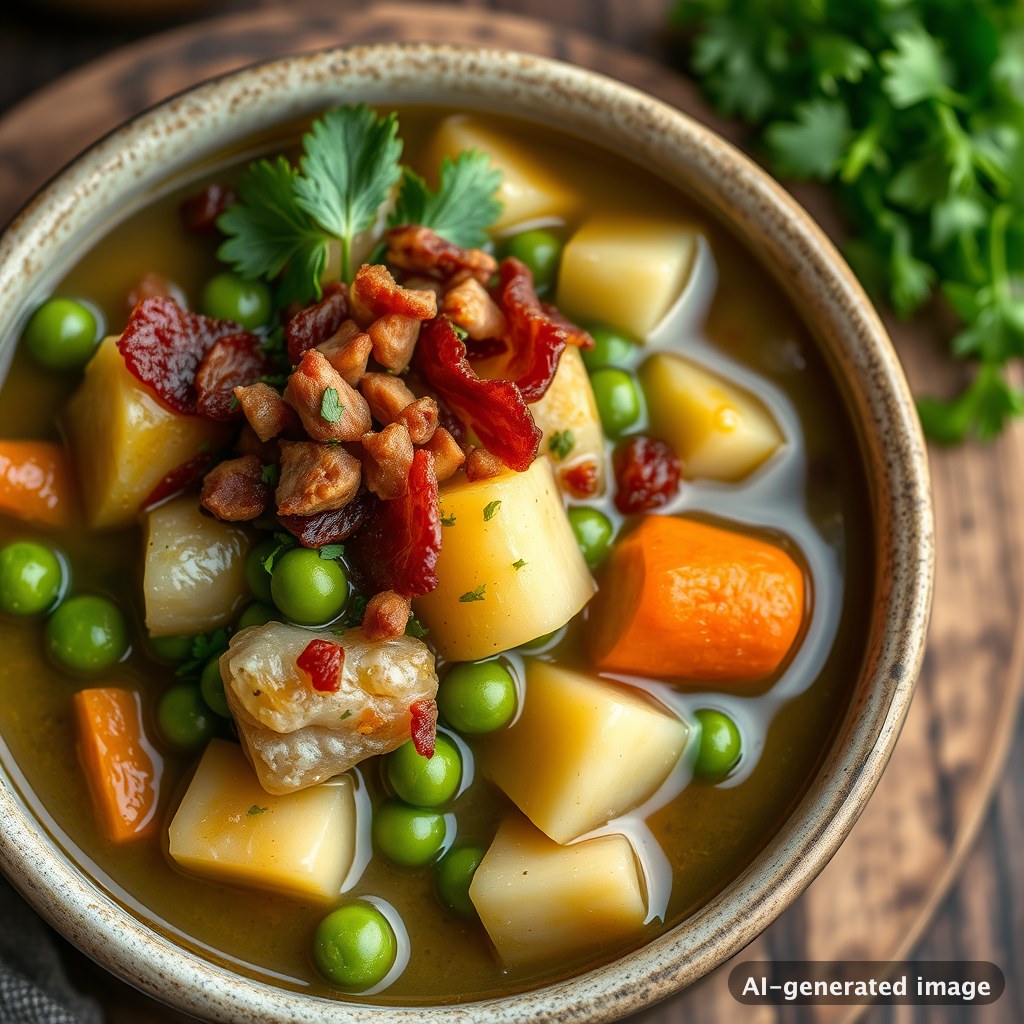
celery tastes crisp and fresh with a slightly salty and spicy note. When you bite into the stalks, essential oils release their full aroma directly in your mouth. This spiciness makes it a perfect companion for many dishes. You use it as fresh vegetables or process it further in the kitchen. When you finely chop it, it becomes an aromatic foundation for soups and sauces. It brings a depth to your meals that simply is missing without these plant oils. The plant is so full of character that it almost tries to dominate the rest of your dish with its presence.
You can find 7 recipes matching your harvest in the app.
You can keep your celery fresh for up to twelve months if you harvest it completely before the first frost and blanch and freeze any surplus. If you time this correctly, your supply in the freezer will be safe from the cold. The frost outside will then only reach the empty soil. Blanching gives you tender stalks for your kitchen. By preparing it this way, you have access to your own vegetables all year round.
The special thing
You will get particularly tender and mild stalks if you actively wrap the plant or mound soil around it during growing. If you use corrugated cardboard, wrap it tightly around the stalks so they can wait for pickup like a package. This small barrier protects the tissue from light and ensures a softer texture. You thus prevent the typical woody aftertaste that occurs with unprotected growth. The greatest danger to your celery is Septoria disease. If this pathogen has been smuggled into your bed as a stowaway in the seeds, spots will later appear on the leaves. Splashing water spreads the disease from leaf to leaf if you do not keep it under control.
Remember
If you give the soil a restful break,
your Sellerina will be an effortless delight.
Companions in mixed culture
Empirical values from mixed-culture practice.
Good companions
Broad bean
Broad bean collects nitrogen in the soil. This way, Celery grows better.
Bush bean
Bush bean collects nitrogen in the soil. This way, Celery grows better.
Pole bean
Pole bean collects nitrogen in the soil. This way, Celery grows better.
Keep good and bad neighbours in mind? You don't have to — GrowSimply combines them correctly when planning.
The Vegetable Guide is free — the sowing calendar and the recipes are free to use with an account, too. Behind GrowSimply are many years of development and high running costs. But we deliberately do without advertising. There is no tracking either. If the project helps you, support it now — so it stays this way.
The guide explains the craft. With GrowSimply you can apply it. You get a personal growing plan with suitable time windows for your location (with postcode-accurate weather data), can implement sustainable planning by following crop rotations, and even receive recommendations for good neighbours. So you don't forget anything, you always get to-dos at the right time. GrowSimply wants to be the only app you need – without ads and tracking.
 Thomas