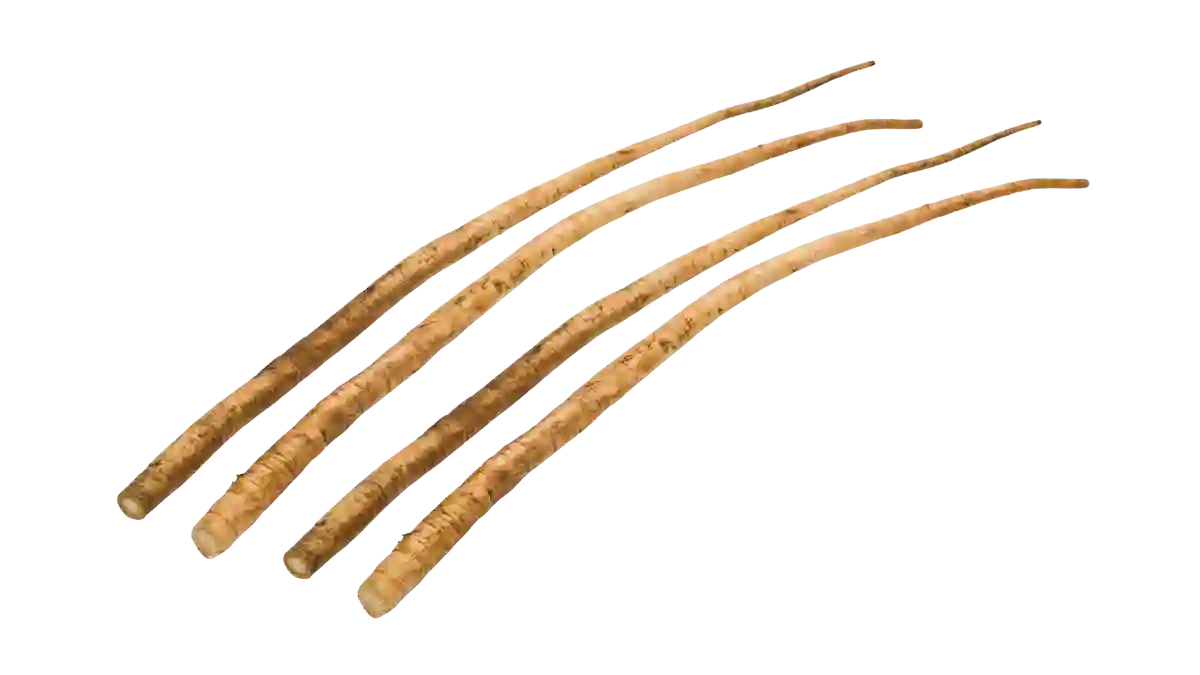
Discover the sweet secret of a forgotten root that brings real surprises to your garden.
Sellerina6 min readUpdated on October 12, 2026
Thomas and Sellerina · Completed by the community
In short
Skirret are planted as seedlings and transplanted between April and May. The harvest takes place from October to December after a crop duration of 7 months. A yield of about 150 g can be achieved per plant.
At a glance
curated data from the GrowSimply database
Germination temperature
8–20 °C
Growing time
approx. 7 months
Yield per plant
approx. 150 g
Planting distance
30 × 40 cm
Growing method
Buy seedling
Harvest window
October – December
You don't need to remember any of this, because GrowSimply creates your growing plan from these properties.
These are average values for Central Europe, from the GrowSimply database. Values differ depending on variety and location. You can change each property by hand — or the Assistant adapts the plant to your climate.
Videos open in a new tab at the respective provider. Their privacy policy applies there.
Location & Soil
The skirret needs a full sun location in your garden and deep, loose soil. If the sun gives it many hours daily, it will develop the necessary energy for its bushy growth. You will get a vigorous plant with a final height of 100 cm if you provide it with this bright location. Since the roots penetrate very deep into the earth, you must prepare the soil to be particularly loose. If the substrate is too firm or stony, the root will become entangled when trying to find its way downwards. You save yourself tedious harvest attempts and get a straight, juicy skirret if you leave it the necessary volume below the surface. The plant grows upwards like a small bush and shades everything lurking directly next to it on the ground.
Sowing & planting
It is best to plant the skirret as a finished seedling in the soil. If you start with seeds instead, you must begin indoors as early as February, as germination can take up to 35 days. A quick soak of the seeds in lukewarm water before sowing significantly accelerates this process. Transplant the seedlings between April and May. When the soil temperature is between 8 and 20 °C, your planted plant will reliably sprout. After planting, it takes 14 to 28 days until the first shoot appears. Maintain a spacing of 30 cm within the row. Leave 40 cm of space between rows. If you respect this space, the root will have enough room for its big plans.
Watering & Fertilizing
The skirret needs a lot of water and many nutrients for its Growing. If you supply it with plenty of ripe compost on a recurring basis, it will get the energy it needs as a heavy feeder. You fertilize every few weeks with nitrogen, for example with nettle manure, so that the Growing picks up speed properly. If the soil remains constantly moist, you prevent the plant from losing interest in growing due to thirst. The skirret is a true nutrient vacuum that literally sucks the soil dry. If you do not provide this supply, it will become more of an ornament than a nutritious root.
Harvest
The skirret is ripe as soon as the foliage dies back at the top. If you wait for this time, you will harvest the first roots from the earth between October and December. Harvesting too early is like taking a cake out of the oven too soon. The plant needs time to become sweet, because only when the sugar formation in the root is complete does it taste really good. When frost passes over the bed, it even makes the roots sweeter. You can harvest from October to December and gain about 150 g per plant. If you only pick what you currently need, you will be harvesting fresh roots from the garden all winter long. The harvest duration is one month. After a cultivation period of 7 months in total, the time for the first harvest is reached, with transplanting occurring six months before this starting point. If you do not completely remove the plant in winter, it will simply sprout again in spring.
Frost & Protection
The skirret is completely winter-hardy and simply waits for you in the soil when temperatures drop. If you do not dig it up completely in winter, it remains safe as an overwintering crop in your bed. You harvest a mature root if you wait until spring to collect it instead of choosing to remove it now. The plant withstands outdoor temperatures down to -18 °C. If you grow it under film or in a tunnel, this protects you from slightly more extreme cold up to -19 °C. Under fleece or in a greenhouse, the skirret even survives frost damage down to -21 °C. A wire basket around the plant protects it from freezing when the soil becomes hard. If you additionally set out mouse traps in your garden, you prevent rodents from using your roots as a winter snack. The skirret is a patient guest in your bed, as long as you leave it its space.
crop rotation
You must give the skirret a planting break of three years in its place. If you plant it at the same location too early, you risk crop failures due to one-sided soil depletion or pests. The skirret belongs to the umbellifers plant family and is a heavy feeder, which means that with its hunger for nutrients, it thoroughly depletes the soil's supply. If you ignore this high demand, your soil will be left swept clean like a freshly mopped dance floor for the next growing season. You will then only harvest small, weak roots instead of sweet splendor. To enable continuous cultivation without these breaks, it is best to plan with four separate sub-areas in your garden. If you divide your beds this way, you can let the umbellifers plant family move through the garden in rotation, without a location needing to constantly regenerate. I used to think you could just continue after one growing season, but the soil does not forgive this selfishness.
Seeds & Propagation
You do not propagate skirret via seeds, but by dividing its rootstock. If you cut off a vigorous part of the rootstock in autumn or spring and replant it, you ensure the most reliable propagation. A single plant yields ten to fifteen white roots for you. When these parts go back into the soil, they simply continue growing as if they had only taken a short break. You can also use seed that has a germination capacity of three years, but the success rate is rather modest with a germination rate of 60%. This means for you: If you rely on seeds, statistically speaking, every second grain does not germinate, which makes your harvest planning unnecessarily complicated. Division of the rootstock, on the other hand, is as reliable as an old friend.
Flavor & Use
The skirret tastes sweetish-mild and its aroma is reminiscent of a mixture of parsnip and carrot. When you taste the root, you encounter a nutty profile, as it has a sugar content of four to eight percent. You can mix it raw and grated as a fresh component into your lettuce or simply sauté it briefly to enjoy it as a crunchy snack. Once you have cooked the root, just peel off the woody fibrous core in the middle, because that little piece of wood won't cause you much extra work.
You can find 1 recipe matching your harvest in the app.
Mice view your skirret as a bakery with a night shift. If you leave the roots in the ground, rodents will often eat them away from you in a single night. You'll then find only an empty hole where your treasure should actually be growing. These little thieves love the sweet taste so much that they can make an entire plant disappear completely within an afternoon or a night. If instead you cook the roots in butter, according to the English gardening author John Worlidge from 1675, you get the sweetest, whitest and most pleasant of all vegetables. After this discovery, the plant took a long break. It had fallen into oblivion for three hundred and fifty years, even though it is actually much sweeter than its reputation.
Remember
If you give the root space and deep soil,
it disappears as sweet splendor in your mouth.
Companions in mixed culture
Empirical values from mixed-culture practice.
Good companions
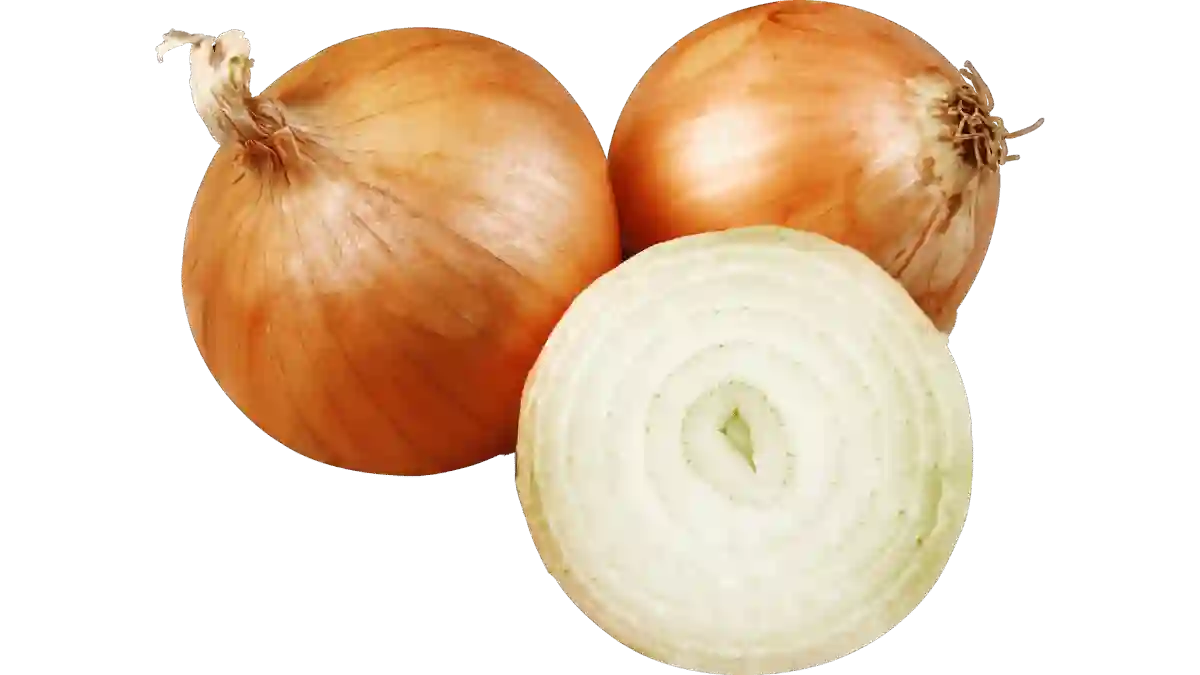
Onion
Onion keeps Möhrenfliege away. This protects Skirret.
Leek
Leek keeps Möhrenfliege away. This protects Skirret.
Garlic
Garlic keeps Möhrenfliege away. This protects Skirret.
Keep good and bad neighbours in mind? You don't have to — GrowSimply combines them correctly when planning.
The Vegetable Guide is free — the sowing calendar and the recipes are free to use with an account, too. Behind GrowSimply are many years of development and high running costs. But we deliberately do without advertising. There is no tracking either. If the project helps you, support it now — so it stays this way.
The guide explains the craft. With GrowSimply you can apply it. You get a personal growing plan with suitable time windows for your location (with postcode-accurate weather data), can implement sustainable planning by following crop rotations, and even receive recommendations for good neighbours. So you don't forget anything, you always get to-dos at the right time. GrowSimply wants to be the only app you need – without ads and tracking.
How do you achieve the perfect red cabbage in your garden? Learn everything about the right care and how you can safely save your harvest until winter.
 Sellerina