The onion: How to succeed with your harvest in the bed
From the first germination to the sweet aroma in the pan, I will guide you through the life of your onion.
Sellerina7 min readUpdated on September 27, 2026
Thomas and Sellerina · Completed by the community
In short
Onions are best pre-grown and transplanted between March and April. The harvest takes place from July to October, with the total crop duration being five months.
At a glance
curated data from the GrowSimply database
Germination temperature
4–20 °C
Growing time
approx. 5 months
Yield per plant
approx. 100 g
Planting distance
10 × 20 cm
Growing method
Direct sowing
Harvest window
July – October
You don't need to remember any of this, because GrowSimply creates your growing plan from these properties.
These are average values for Central Europe, from the GrowSimply database. Values differ depending on variety and location. You can change each property by hand — or the Assistant adapts the plant to your climate.
Videos open in a new tab at the respective provider. Their privacy policy applies there.
Location & Soil
The onion needs a sunny spot in your garden and loose soil for its well-being. When the sun shines directly on it all day long, it provides you with the energy it needs to grow its bulb. You will find it as a compact bunch, the so-called clump, which grows about 40 cm high. Since its roots only stay shallow below the surface, it won't forgive you if you plant it in hard or compacted soil. If the soil is loose, the fine roots can easily search for water without running into a wall of clay. You will save yourself tedious rework during harvesting if the substrate remains soft and the onion does not get stuck like an anchor in the hard earth.
Sowing & planting
Direct sowing
Direct-sowing option
The best way to plant onions is as sets in March or April, making sure only the tip sticks out slightly from the soil. If you choose this method, you will benefit from more robust plants that are ready for harvest starting in July. Use loose soil so that the onion can find space without resistance. When planting sets, maintain a distance of 10 cm within the row and 20 cm between rows. This order ensures that each onion has enough room to grow. Alternatively, you can sow directly, which is possible in the bed in March or even on the windowsill from February. If you pre-cultivate the sowing, the seed needs about a month of nursery time before it moves into the bed. The germination temperature must be between 4 and 20 °C so that the seeds germinate reliably. After sowing, it takes 14 to 21 days until the first green tips appear from the soil. Those who prefer sowing instead of planting sets have a longer waiting time, but the principle remains the same. Compared to that, setting onion sets is as uncomplicated as a cheerful neighbor who simply shows up without much fuss.
The right time windows for your garden are already in your growing plan — you don't even have to do the math. They are derived from your location and climate.
Watering & Fertilizing
The onion requires a medium water requirement and is a medium feeder that draws a moderate amount of nutrients from the soil. If you incorporate compost into your bed in the spring, the plant will receive exactly the right amount of nutrients for its growth. For a long crop, you can top up with nettle manure once to replenish the supply. If fresh manure lands directly in the onion bed, the nitrogen contained therein will only promote foliage growth. If the foliage grows excessively, the bulb will not ripen properly and will rot on you later in storage. The onion is like a guest who enjoys eating but loses their stomach immediately with too much attention.
Harvest
You can recognize the maturity of the onion by the fact that the foliage turns yellowish-brown, wilts and finally falls over. The outer skin then feels as dry as paper. If you wait for this condition, you can start harvesting between July and October. You have about 4 months after planting until the first onion is ready. Since the total crop duration is 5 months, you have a harvest window of one month for continuous harvesting. If you harvest on a dry day and then let the onions dry in the air, you will have firm onions in the net until March. You only pull them out of the ground on a dry day, because only an onion harvested dry remains firm later in storage. If you pull the plant from the soil too early, it loses its shelf life and becomes soft. Each individual plant yields about 100 g for you. Through its wilted appearance, the onion tells you exactly when it is time for you.
Frost & Protection
The onion survives frost best if you give it the right cover. In an open field, safety for your harvest ends at -9 °C. If it gets colder, it loses its reliability in the open field without protection. You can shift the limit slightly downwards if you pull foil or a tunnel over it, because then it withstands -10 °C. With a greenhouse or a layer of fleece – that is a thin, breathable fabric for protection – you protect it even up to -12 °C. If you plant the onion as an overwintering crop, simply leave it in the bed so that it can spend the winter there. You save yourself the tedious digging up if you leave it this space. The plant is like a little frostbite expert who, depending on clothing, withstands significantly more cold than in a thin summer shirt.
crop rotation
You may only plant onions in the same spot after a five-year break. By observing this time period, you avoid soil depletion and diseases in your plants. The onion is a medium feeder, which means it draws a medium amount of nutrients from the earth. If you constantly treat the group of onions in the same location, subsequent ones will rob each other of strength like an endless buffet. You will only harvest reliable yields if you plan six separate sub-areas in your garden for continuous cultivation. If you use these six sub-areas one after another, your soil remains healthy and your onions grow large without external help.
Seeds & Propagation
You win onion seeds by overwintering a healthy plant and bringing it to bloom in the second year. The onion needs two years of life for this process. If you simply leave the plant in the ground after the first year, it will only bloom in the following year. You harvest the seeds only when they are fully ripe. If you store the seed well, its germination capacity is preserved for 2 years. The germination rate is about 70 %. This means that statistically speaking, only 14 out of 20 sown grains of yours will actually germinate. So you have to expect a certain amount of impatience, as the onion does not immediately put all its energy into offspring. If you harvest too early, you miss the chance for a successful next generation. The plant plays a little game with time here, only showing its full potential in the second year.
Flavor & Use
The onion tastes strong and spicy when raw, with a slight sweetness in the background, and becomes mild and sweet when heated. When you fry or sauté it, the heat releases the sugar from the cells, causing the sharp character to disappear. Through this transformation, you harvest a gentle side dish instead of a fiery challenge for your tongue. In its raw form, the plant often shows itself as very dominant in the mouth. However, if you treat it patiently in the pan, the aggressive kick of spiciness turns into a sweet dessert for your vegetables or meat. You can also store it for a long time if you choose the right conditions.
You can find 51 recipes matching your harvest in the app.
You store your onion in a cool, dry and airy net or a braid so that they remain preserved well into the next spring. If you wrap the bulbs too moistly after harvesting, you lose your stock not in the bed, but first in the cellar. The full net turns into brown mush there because moist onions rot. You therefore let your harvest dry in the air for a few days before it moves house. Once the onion has successfully gone through this drying process, a late variety lasts until March. A net full of onion in the cellar looks like a supply for the whole winter, provided you consistently avoid moisture.
Something special
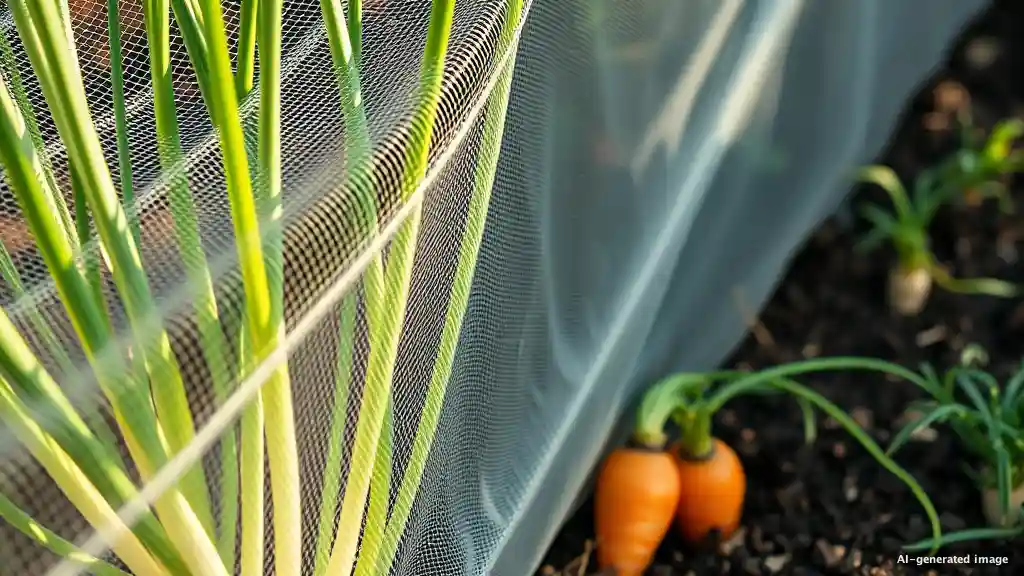
You should get to know the onion as a plant that shows its own character shortly after sprouting from the earth. If you don't pay attention in April, you risk a massive crop failure due to the onion fly. The fly lays its eggs directly on your bed starting in April, and the larvae hatching from them eat their way through your bulb undisturbed from the inside. You prevent this pest damage if you spread a fine-mesh net over the bed as early as April, before the first fly places its eggs there. If you additionally plant a row of carrot directly next to your onions, you use a natural protection mechanism. The carrots keep the onion fly away and in return, the onion helps the carrot against the carrot fly. This neighborly help is a useful alliance that was not negotiated between the two plants at all. Formerly, New York was called Big Onion instead of Big Apple because nobody wanted to smell like onions.
Remember
Plant the shallot in March or April,
then you can harvest it from July to October.
Companions in mixed culture
Empirical values from mixed-culture practice.
Good companions
Cola plant
Cola plant keeps Zwiebelfliege away. This protects Onion.
Parsley
Parsley keeps Zwiebelfliege away. This protects Onion.
Keep good and bad neighbours in mind? You don't have to — GrowSimply combines them correctly when planning.
The Vegetable Guide is free — the sowing calendar and the recipes are free to use with an account, too. Behind GrowSimply are many years of development and high running costs. But we deliberately do without advertising. There is no tracking either. If the project helps you, support it now — so it stays this way.
The guide explains the craft. With GrowSimply you can apply it. You get a personal growing plan with suitable time windows for your location (with postcode-accurate weather data), can implement sustainable planning by following crop rotations, and even receive recommendations for good neighbours. So you don't forget anything, you always get to-dos at the right time. GrowSimply wants to be the only app you need – without ads and tracking.
How do you achieve the perfect red cabbage in your garden? Learn everything about the right care and how you can safely save your harvest until winter.
How to successfully cultivate your arugula and harvest the full aroma. Learn everything about the ideal location and the right care for your vegetable.
 Sellerina