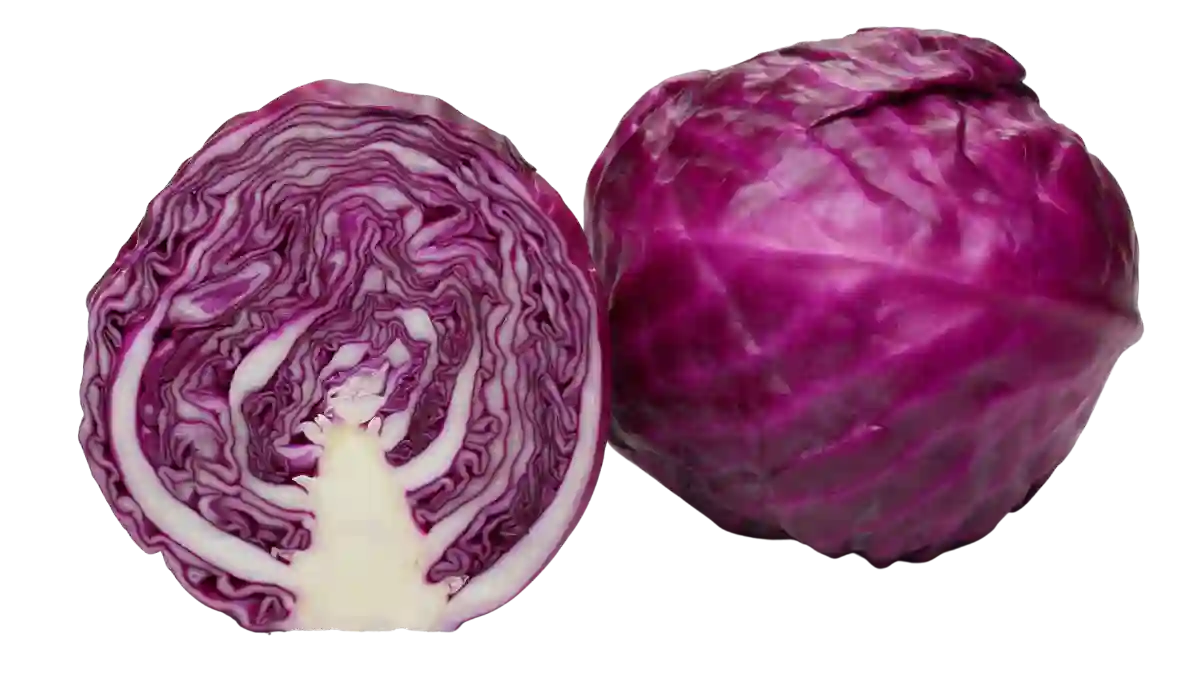
With the right preparation and a sunny spot, you will succeed in growing a strong red cabbage that enriches your garden for months.
Sellerina6 min readUpdated on October 5, 2026
Thomas and Sellerina · Completed by the community
In short
Red cabbage is grown by pre-growing and transplanting between April and June. The harvest can begin between August and November, with the total crop duration being five months.
At a glance
curated data from the GrowSimply database
Germination temperature
5–25 °C
Growing time
approx. 5 months
Yield per plant
approx. 1 kg
Planting distance
40 × 50 cm
Growing method
Pre-growing
Harvest window
August – November
You don't need to remember any of this, because GrowSimply creates your growing plan from these properties.
These are average values for Central Europe, from the GrowSimply database. Values differ depending on variety and location. You can change each property by hand — or the Assistant adapts the plant to your climate.
Videos open in a new tab at the respective provider. Their privacy policy applies there.
Location & Soil
Red cabbage needs a sunny spot in your garden and prefers humus-rich as well as lime-containing soil. If you transplant the young plant into the bed in April, it will find its ideal location there. Since red cabbage grows as a bush with a final height of 40 cm, it offers no significant shade to your smaller neighbors in the bed. Its medium-depth roots require soil that is loose enough so they can spread without much resistance. If you provide it with this nutrient-rich substrate, the plant can put all its energy into its vigorous foliage. Soil that is too low in lime would make the red cabbage seem like a tired guest who is present but has little appetite for Growing.
Sowing & planting
Pre-growing
Pre-growing option
You pre-grow your red cabbage for two months before finally planting it in your bed from April to June. If the soil temperature is between 5 and 25 °C, the seeds will germinate reliably. You then wait about 7 to 14 days for the first emergence of the small seedlings. Since red cabbage does not like being crowded, you maintain a planting distance of 40 cm in the row and 50 cm between rows. If you leave this space, the plant will have enough room for its later splendor.
The right time windows for your garden are already in your growing plan — you don't even have to do the math. They are derived from your location and climate.
Watering & Fertilizing
red cabbage requires a high amount of water and many nutrients to form strong heads. If you give it especially much water in July and August, you prevent drought stress during the most important Growing phase of summer. red cabbage is a heavy feeder, which means that it has a huge hunger for nutrients. You save yourself expensive fertilizer from the store if you work plenty of ripe compost into the soil before planting, because this already covers its needs. If you additionally fertilize with nitrogen every few weeks, for example with nettle manure, then that will massively boost its Growing. Without this regular feeding, the head remains small and the plant looks hungry.
Harvest
You can recognize the ripeness of your red cabbage by a firm, compact head and a dull sound when tapped. When you press against the vegetable with your finger, the cabbage essentially signals its readiness. A dull tone signals the right moment to you, because if it sounds bright, it still lacks the necessary density. The outer leaves must lie close to the head so that your yield is truly ready for you. Once you feel this firmness, you can start harvesting between August and November. Late varieties even allow you to wait until December. You start the first harvest about four months after planting in the bed. Your red cabbage will not end immediately after that, but offers you a continuous supply of fresh vegetables for a duration of one month.
If you do everything correctly, you will harvest an average of 1000 g per plant. The total crop duration from the first day in the soil to the end of the harvest is five months. You can rely on your red cabbage meeting you in the cellar with a firm head even in February.
Frost & Protection
Red cabbage survives frost up to a certain limit, with the safety of your harvest depending heavily on your protective material. If you simply leave it in an open field, its safe cultivation limit is -7 °C. You will harvest a stable plant if you keep it under film or in a tunnel, as the cabbage can tolerate up to -8 °C there. If you make it particularly cozy and grow it in a greenhouse or under fleece, the limit drops to -10 °C.
You protect your plants from freezing if you use these protective layers, because the material acts like a warm coat against frost. If you stretch a fine-mesh insect protection net over the cabbage immediately after planting, you keep the large white butterfly, cabbage aphid, and cabbage fly out. Your red cabbage will greatly enjoy this protection, as it can grow undisturbed without these pests.
crop rotation
You must not plant red cabbage in the same spot again until after a five-year planting break. By observing this period, you avoid soil depletion and diseases in your garden bed. Red cabbage belongs to the mustard family. Since it is a heavy feeder that extracts extremely many nutrients from the soil, it leaves a hungry patch in your earth.
If you observe the five-year planting break for this plant family, you ensure a healthy harvest. For continuous cultivation, you need a total of six separate sub-areas in your garden. Without this division, you risk that your soil is swept as empty as a refrigerator after a big party. If you strictly rotate the growing areas, the nutrient balance remains in equilibrium.
Seeds & Propagation
You win red cabbage seeds by overwintering a healthy plant and bringing it to bloom in the second year. If you harvest the ripe seeds after flowering, you secure your own crop for the future. With proper storage, the seed viability lasts for 4 years. So, you can expect an 80% germination rate if you store the material correctly. If you start indoor sowing in February, the red cabbage will appear within five to eight days. As soon as the first true leaf pairs stand, you transplant each seedling into its own container, which is essentially its first apartment. Pricking out ensures that your plants have enough space for their Growing.
Flavor & Use
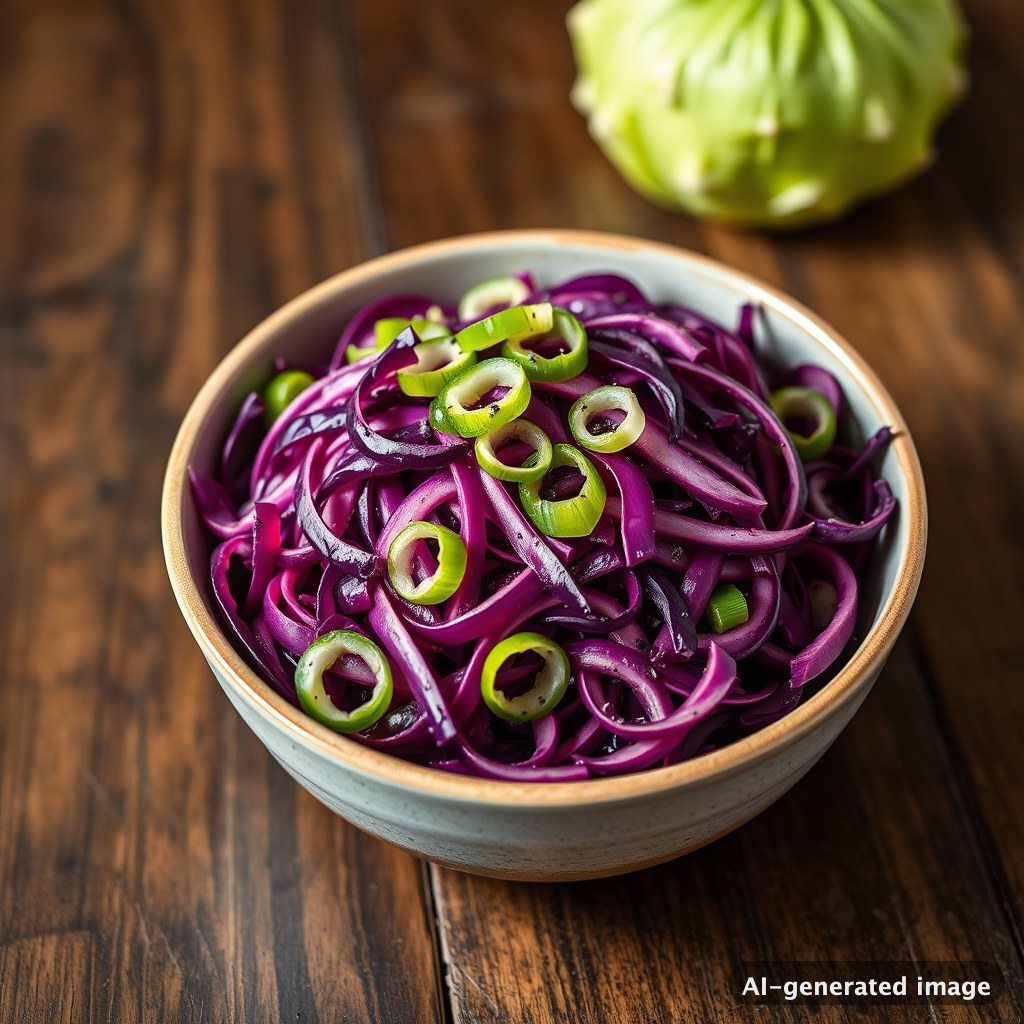
Red cabbage tastes mild-spicy with a fine sweetness and shows its true strength in your kitchen only after harvest. When you eat it raw, it crunches between your teeth and unfolds a mild cabbage aroma with a sweet note. You can store it for a long time if you keep the heads cool.
You can find 1 recipe matching your harvest in the app.
Store your red cabbage in a cool, dark place away from fruit to keep it fresh until February. The ideal conditions are 0 to 4 °C and high humidity, for example in a cool cellar. Harvest the heads dry and undamaged, ideally with the stalk and the outer leaves. If you place it in the cellar directly next to your apples, you will lose it quickly. This is because apples release a gas that accelerates decomposition. If you follow this separation, you can harvest fresh vegetables from your own cellar for months.
If your cellar is not sufficient or if you have harvested a lot, there are other ways:
Canning: Pre-cook the red cabbage with some vinegar and apple pieces, as the vinegar preserves the strong red color. Fill it hot into clean jars. In a pressure canner or oven, it will last for a year or longer after about 90 minutes at 90 to 100 °C.
Freezing: Cut the cabbage into fine strips and blanch it for two to three minutes. You can also freeze it already cooked. This way, it remains shelf-stable for about a year.
Lactic acid fermentation: Shred the cabbage finely, knead it with about 2% salt, and pack it into a fermentation vessel. After two to four weeks at room temperature, it is ready like sauerkraut and will last several months if stored cool.
Pickling in vinegar: Boiled and covered with vinegar, sugar, and spices, it stays fresh in jars for several months.
The Special
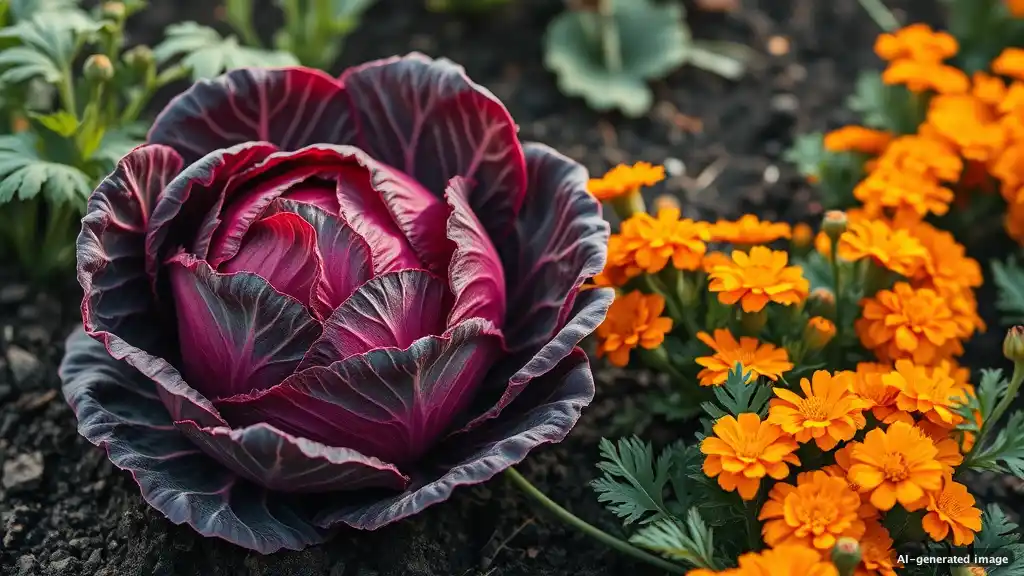
The color of your red cabbage depends significantly on the acidity level in the kitchen. If you add a splash of vinegar or a sour piece of apple, the deep red is preserved. If this acid is missing during cooking, the color turns blue. In some areas, that same head is therefore also called Blaukraut. If your plant suddenly hangs limp in the bed at midday, it is often just a fungus causing the roots to swell. You don't have to fear a catastrophe then, because the plant merely has a guest visiting. However, some threats sit permanently in the soil and wait there for years for their next use. Clubroot is such a persistent inhabitant of the soil. But not every danger comes from below; some simply fly directly into your bed. If you plant marigolds between your cabbage heads, you help against nematodes, the tiny roundworms in the soil. These companions can support the infestation, but they do not replace the protective net of a crop rotation.
Remember
From April to June transplanted into the bed,
in August to November the harvest is spread.
With vinegar it stays red, without it turns blue,
you decide the color, exactly for you.
Companions in mixed culture
Empirical values from mixed-culture practice.
Good companions
Hyssop
Hyssop keeps Kohlweißling away. This protects Red cabbage.
Lavender
Lavender keeps Kohlweißling away. This protects Red cabbage.
Thyme
Thyme keeps Kohlweißling away. This protects Red cabbage.
Pea
Pea collects nitrogen in the soil. This way, Red cabbage grows better.
Celery
Celery keeps Kohlweißling away. This protects Red cabbage.
Poor companions
Fennel bulb
Fennel bulb releases substances into the soil. This slows growth. Plant Fennel bulb further away.
Keep good and bad neighbours in mind? You don't have to — GrowSimply combines them correctly when planning.
The Vegetable Guide is free — the sowing calendar and the recipes are free to use with an account, too. Behind GrowSimply are many years of development and high running costs. But we deliberately do without advertising. There is no tracking either. If the project helps you, support it now — so it stays this way.
The guide explains the craft. With GrowSimply you can apply it. You get a personal growing plan with suitable time windows for your location (with postcode-accurate weather data), can implement sustainable planning by following crop rotations, and even receive recommendations for good neighbours. So you don't forget anything, you always get to-dos at the right time. GrowSimply wants to be the only app you need – without ads and tracking.
How to successfully cultivate your arugula and harvest the full aroma. Learn everything about the ideal location and the right care for your vegetable.
 Sellerina