Create account Forgot password


Create account Forgot password
Testmodus aktiv Erstelle deinen ersten Plan – dann kannst du speichern.

Create your own growing plan.
4. Overview and organization

Creating a sustainable growing plan takes time, because there are many things to keep an eye on. So your effort doesn’t end in frustration, it’s important to keep an overview with good organization.

🧱 Plan growing areas 🧮 Mini calculator 📌 Practical examples
4. Overview and organization
Your growing areas

Your growing areas

Many start motivated – and then lose track: What was planned when? Where was which crop? What needs to be done this week? In this chapter, you bring order to your growing plan: you structure growing areas and sub-areas, draw a sketch, and build a calendar plus to-do list from it. This turns many individual ideas into a clear flow that carries you through the garden year.

Here is a mini check to quickly assess growing area and needs.


~ 0 KG vegetables/year  |  ~ 0 People supplied

~ 0 KG vegetables/year  |  0 m² growing area

1. Plan growing areas and sub-areas to be relatively the same size.

Relatively similarly sized growing areas and sub-areas are very practical because they later allow evenly high yields when the growing plan rotates annually and the plants have to change location.


2. Draw a sketch of your growing areas.

The existing growing areas, as well as the ones you still want to create, need a name or at least a clear identifier such as a numbering.

The existing growing areas, as well as the ones you still want to create, need a name or at least a clear identifier such as a numbering.

Maybe your growing areas are very large - so large that the expected harvest is simply too abundant. Or maybe you only have these 3 growing areas available. Either way, the goal is to create plannable growing areas or groups. You achieve this by having a growing area consist of 3 to 6 sub-areas or your group contain 3 to 6 growing areas and/or sub-areas. You’ll learn why in the next chapter - 5. Crop rotations and planting breaks.

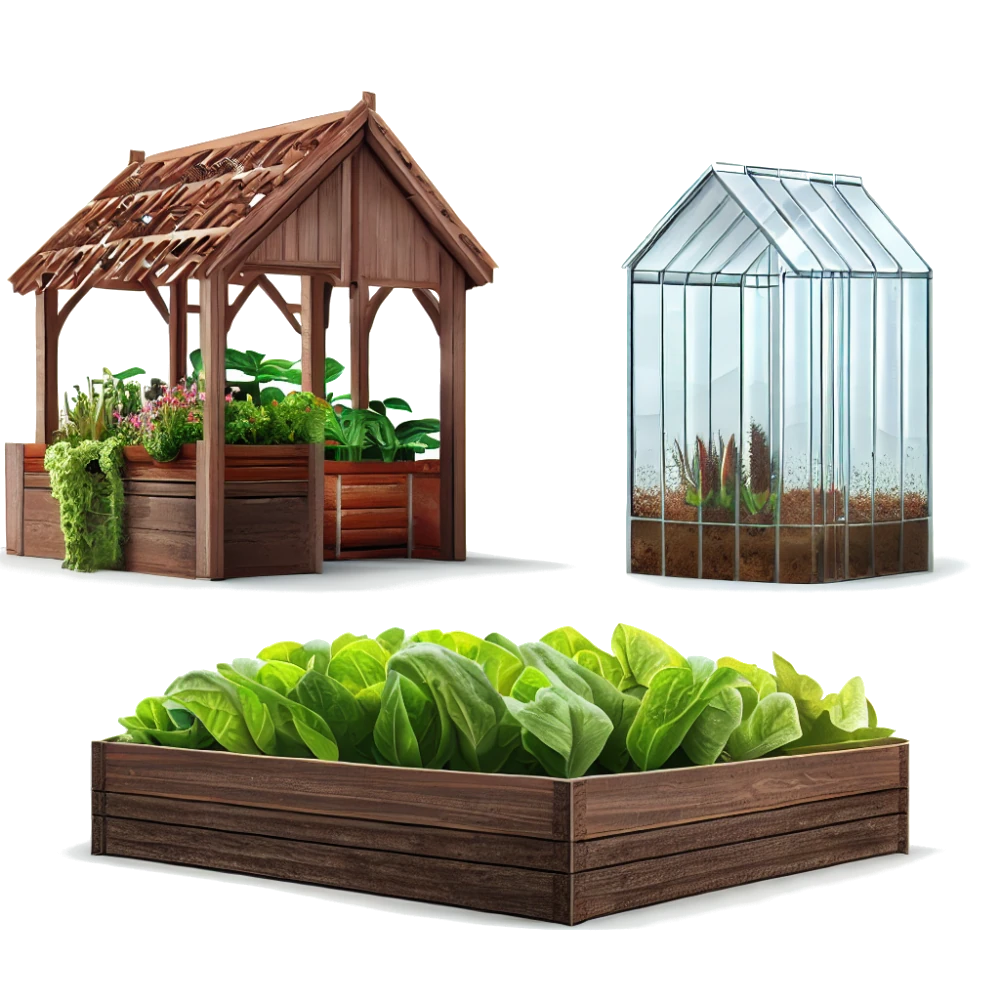
Raised beds by the hedge

Maybe your growing areas are very large - so large that the expected harvest is simply too abundant. Or maybe you only have these 3 growing areas available. Either way, the goal is to create plannable growing areas or groups. You achieve this by having a growing area consist of 3 to 6 sub-areas or your group contain 3 to 6 growing areas and/or sub-areas. You’ll learn why in the next chapter - 5. Crop rotations and planting breaks.

If your needs are not yet met and there is still space available - just keep planning in the same way. One growing area consists of 3 to 6 sub-areas, or a group of growing areas consists of 3 to 6 growing areas and/or sub-areas.

Beds by the garden shed

If your needs are not yet met and there is still space available - just keep planning in the same way. One growing area consists of 3 to 6 sub-areas, or a group of growing areas consists of 3 to 6 growing areas and/or sub-areas.

3. Don’t forget.

Create your sketches carefully and keep them in a safe place. The sketches are also part of the basis for your growing plan.

Create your sketches carefully and keep them in a safe place. The sketches are also part of the basis for your growing plan.
A well-structured calendar is essential to keep an overview. You’ll later use it to plan pre-growing and sowing clearly and avoid missing important dates. Tip: color coding (e.g. green for pre-growing, blue for sowing) helps you quickly spot the most important tasks.

Your calendar

A well-structured calendar is essential to keep an overview. You’ll later use it to plan pre-growing and sowing clearly and avoid missing important dates. Tip: color coding (e.g. green for pre-growing, blue for sowing) helps you quickly spot the most important tasks.

To create the clearest possible calendar, it’s best to use the sketch of the growing areas as a copy and add the month. Print it out for each month and set it aside for now; we’ll need it in the next chapters.

In addition, we also need a nice list. A to-do list.

Beds by the hedge - May -

Maybe your growing areas are very large - so large that the expected harvest is simply too abundant. Or maybe you only have these 3 growing areas available. Either way, the goal is to create plannable growing areas or groups. You achieve this by having a growing area consist of 3 to 6 sub-areas or your group contain 3 to 6 growing areas and/or sub-areas. You’ll learn why in the next chapter - 5. Crop rotations and planting breaks.

TO-DO list

Maybe your growing areas are very large - so large that the expected harvest is simply too abundant. Or maybe you only have these 3 growing areas available. Either way, the goal is to create plannable growing areas or groups. You achieve this by having a growing area consist of 3 to 6 sub-areas or your group contain 3 to 6 growing areas and/or sub-areas. You’ll learn why in the next chapter - 5. Crop rotations and planting breaks.

GrowSimply - manages your growing areas.


Your own vegetables.

· No tracking · No data selling
· No ads · Servers in Germany

Imagine opening your garden planning – and everything is immediately clear. GrowSimply shows you your growing areas as a clean overview that you can adjust at any time: add new areas, change existing ones, bring order. Planning no longer feels like paperwork, but like: “Okay, I’ve got it under control.”

Right

Nice overview

Right

No paperwork

Right

Own images

Create your own vegetable growing plan. Start planning.

Really good!

That was the preparation; shall we start planning?

5. Crop rotations and planting breaks

Your security key has been renewed. Please sign in again.

Please sign in or create an account.


Create account Forgot password