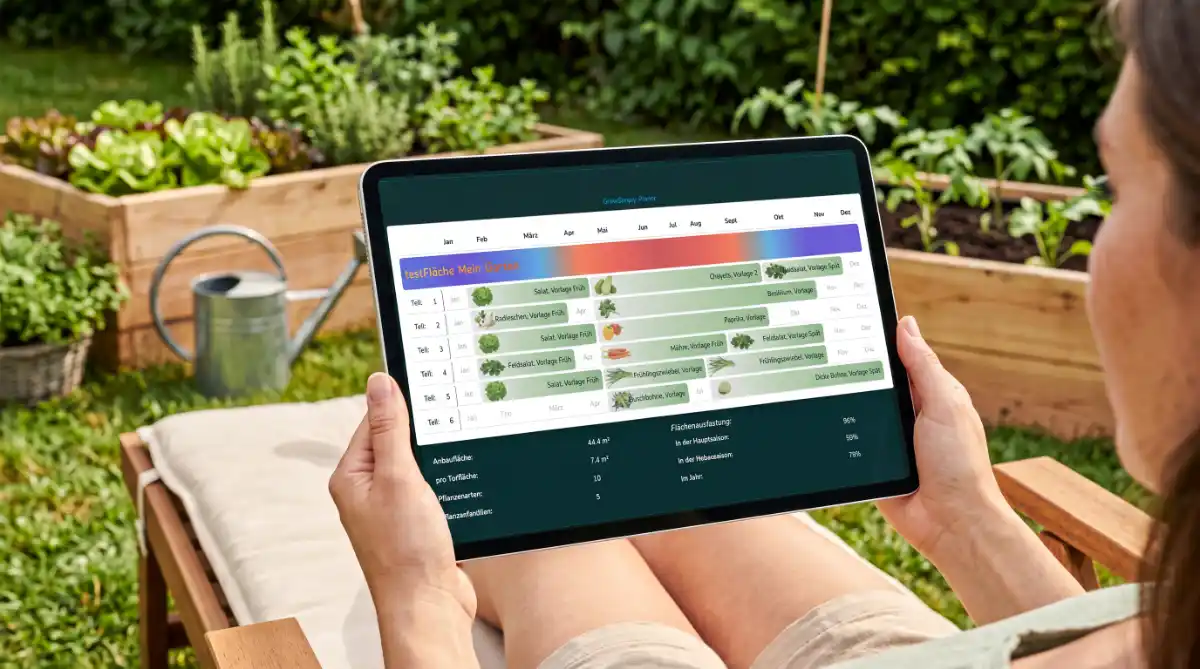
The annual rotation: how your plan moves into next year
Your sustainable vegetable growing plan is finally ready and you're looking forward to gardening and waiting for your next harvest. But it's easy to lose track soon or in a few years. So that doesn't happen - here are a few tips.
🔁 Annual rotation🧠 Keep an overview📅 Plan sustainably
Your documents
When the garden year is over, the anticipation for the next growing season grows. Your planning documents are the foundation for keeping it that way. So that no mistakes creep in over time - recreate your documents. Don't just trace this year's plans and reuse them. Make the effort and create your plans again - it pays off!
Create a new calendar for next year based on this year's.
This year's planning document:
Beds by the hedge - May -
TO-DO list
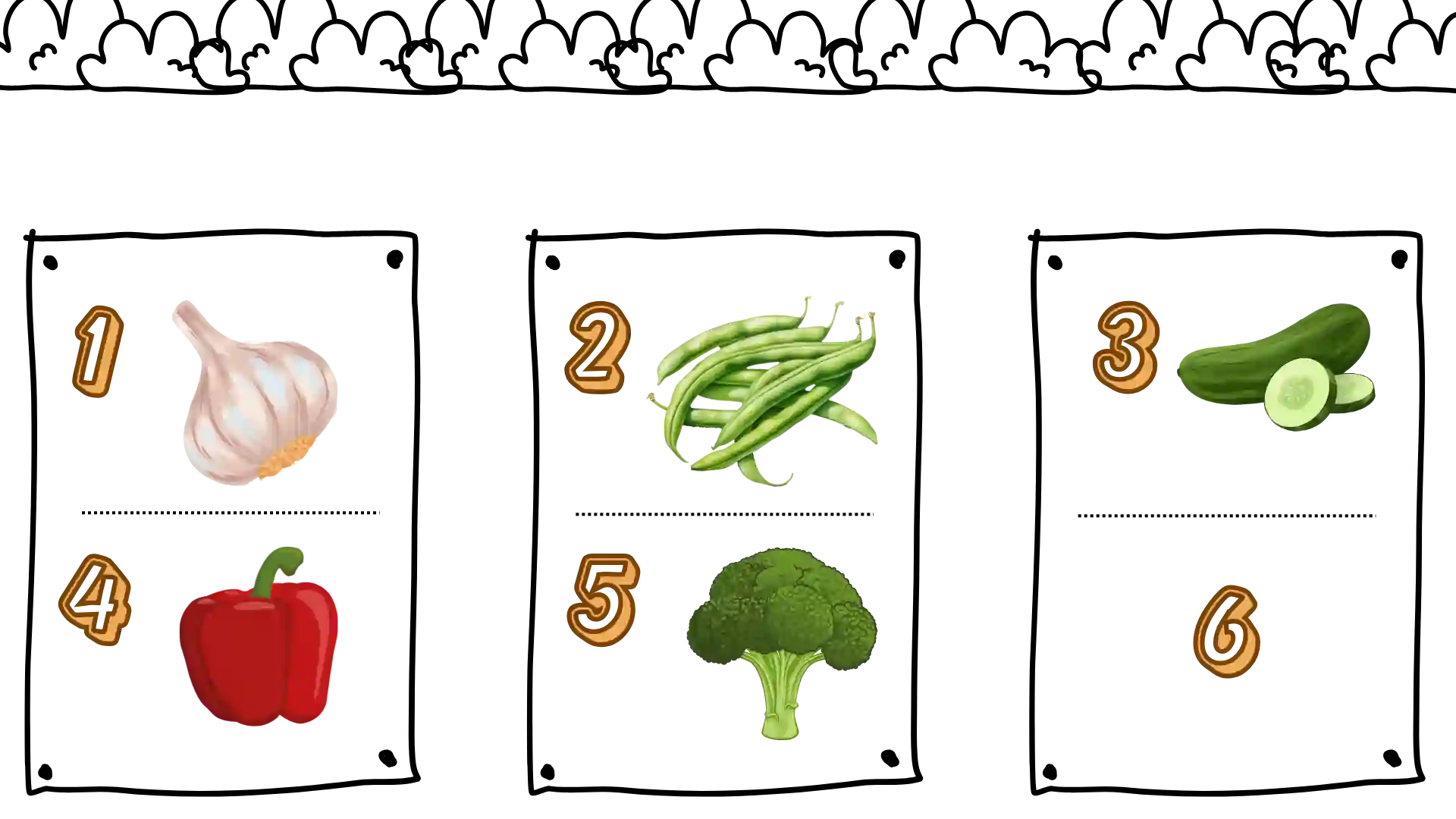
Transplant sweet pepper x4
Transplant broccoli x4
Transplant cucumber x4
Transplant bush bean x4
Create the month of May for next year like this:
The result then looks like this:
Beds by the hedge - May -
TO-DO list
Transplant sweet pepper x4
Transplant broccoli x4
Transplant cucumber x4
Transplant bush bean x4
Changes?
Be careful with other plant species!
Unlike changing a variety, changing a plant species can have negative effects and undo your efforts in creating the growing plan.
Try new varieties!
Red carrots are for everyone, right? Try the yellow ones! New varieties don't have negative effects on soil life or the sustainability of your growing plan. Here, you can try things out year after year.
Pay attention to crop rotations
Crop rotation is a principle in vegetable growing in which plants from different plant families are grown one after another in the same growing area. The goal is to maintain soil fertility and health in the long term.
Observe the planting breaks
The planting break of a plant indicates how many years it may not be grown in the same growing area. As a rule, the planting break of the plant family applies to the subordinate plant species; there are only a few exceptions where the planting break of a plant species differs from the parent plant family.
Optional: Consider companion planting
To this day, there are no scientific studies that clearly prove how effective a good companion plant actually is. Most recommendations therefore rely on the experience of vegetable farmers and hobby gardeners. However, many individual factors such as location, soil conditions, and care play a role that influences results and makes reproducibility difficult.
· No tracking · No data selling · No ads · Servers in Germany
Now you're well equipped to create your own vegetable growing plan and manage your garden sustainably. However, we know how time-consuming and complex planning and management are - that's exactly why we continuously develop this app. If you'd like to save yourself the effort and have your vegetable growing plans created and managed by GrowSimply, we'd be happy to welcome you as a garden friend. 🌱
More time for you
No paperwork
No planning mistakes
Help
Sellerina
The guide for this page is in the making. Until then, our support is happy to help.